Exam stress is one of the most common forms of anxiety teenagers experience, and it tends to show up as a tight chest, racing thoughts, or trouble sleeping in the weeks before exams start. A few short meditation techniques can genuinely help take the edge off — without adding another thing to an already packed revision schedule.
Why Exam Stress Hits Teenagers So Hard
Exams often feel disproportionately high-stakes to teenagers, partly because the teenage brain is still developing the parts responsible for weighing long-term perspective against immediate pressure. A bad exam can feel catastrophic in the moment, even when, realistically, it's one data point among many.
On top of that, exam periods often coincide with disrupted sleep, skipped meals, and reduced exercise — all of which make stress feel worse than it might otherwise. Meditation won't fix a chaotic schedule, but it can help manage the stress response while everything else gets sorted.
A 2-Minute Meditation Technique Before an Exam
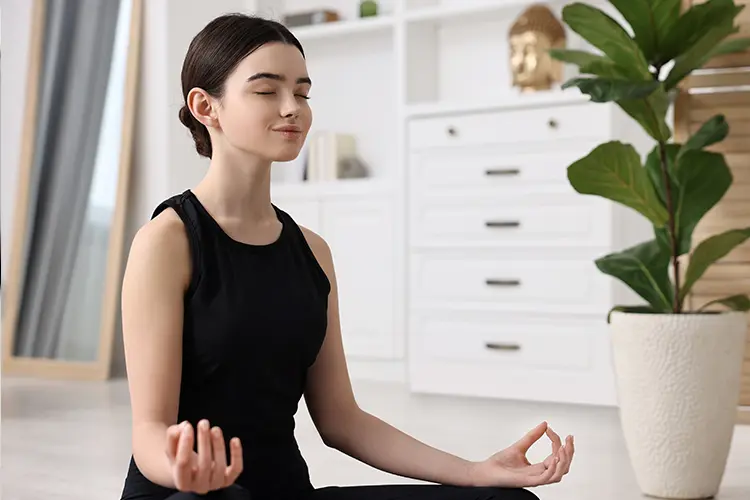
This works well in the minutes before walking into an exam hall, when there's no time for a long session:
- Sit or stand somewhere quiet for a moment, even if it's just outside the exam room
- Breathe in slowly through the nose for a count of four
- Hold for a count of two
- Breathe out slowly through the mouth for a count of six
- Repeat four or five times — the longer exhale helps calm the nervous system
This technique works because a longer exhale relative to the inhale activates the body's relaxation response, which directly counters the racing-heart, shallow-breathing feeling of acute exam nerves. A 2025 study using EEG and heart-rate monitoring found that slow-paced breathing measurably reduced state anxiety and improved markers of emotional regulation in the brain, even after exposure to a stressful stimulus — you can read the study via PMC.
A Meditation Technique for Study Breaks
If your teenager has five or ten minutes between study sessions, a basic body scan can reset focus better than scrolling a phone:
Sit or lie down somewhere comfortable. Starting at the feet, slowly bring attention up through the body — feet, legs, stomach, chest, shoulders, arms, face — noticing any tension and consciously relaxing each area before moving to the next. It takes about five minutes and tends to leave people noticeably calmer and more focused than a break spent on social media.
If your teenager finds it hard to sit still for even this, the basics in our general beginner's meditation guide are worth working through together first.
"The goal isn't to eliminate exam nerves completely — a small amount of pressure can actually sharpen focus. The goal is to stop the nerves from spiralling into something unmanageable."
What Else Helps With Teen Exam Stress
Meditation works best as one piece of a bigger picture. Adequate sleep matters more than an extra hour of late-night cramming, regular meals support steady energy and mood, and short physical breaks — even a ten-minute walk — measurably reduce stress hormones. If exam-related anxiety is severe, persistent, or affecting sleep and eating well beyond exam season, it's worth involving a GP or school counsellor rather than relying on meditation alone.
Dealing with anxiety and poor sleep beyond just exam season? We've written about that too.
Mindfulness for Teen Sleep & AnxietyFrequently Asked Questions
It can help take the edge off day-to-day stress and improve focus during study sessions, but it works best as one part of a broader approach that also includes enough sleep, breaks, and realistic study planning.
Frame it around the practical benefit they care about — better focus while studying, or calming pre-exam nerves — rather than as a wellness activity. A short, no-pressure two-minute breathing exercise before a study session is an easy first ask.
Even two to three minutes of focused breathing right before walking into an exam can measurably calm nerves. Longer sessions of five to ten minutes during study breaks can help with focus and stress over the weeks leading up to exams.
Yes — a racing heart, sweaty palms, or a tight stomach before exams are common physical stress responses. If the anxiety feels severe or is affecting daily life well beyond exam periods, it's worth speaking to a GP or school counsellor as well.
Mindfulness Matters
Plain-English guides to meditation, yoga, and energy healing — written for people who are curious but new, with no jargon and no pressure to "get it right" straight away.